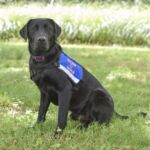
The Hero Dogs Facility Dog program places highly skilled dogs in facilities throughout the mid-Atlantic region. Our facility dogs provide animal-assisted interventions, comfort, and education to clients and staff in their designated facilities. Facility Dogs work full-time with staff to achieve specific treatment or program goals. They go home every night with the staff member who adopted them to enjoy some well-deserved time off.
What is a facility dog?
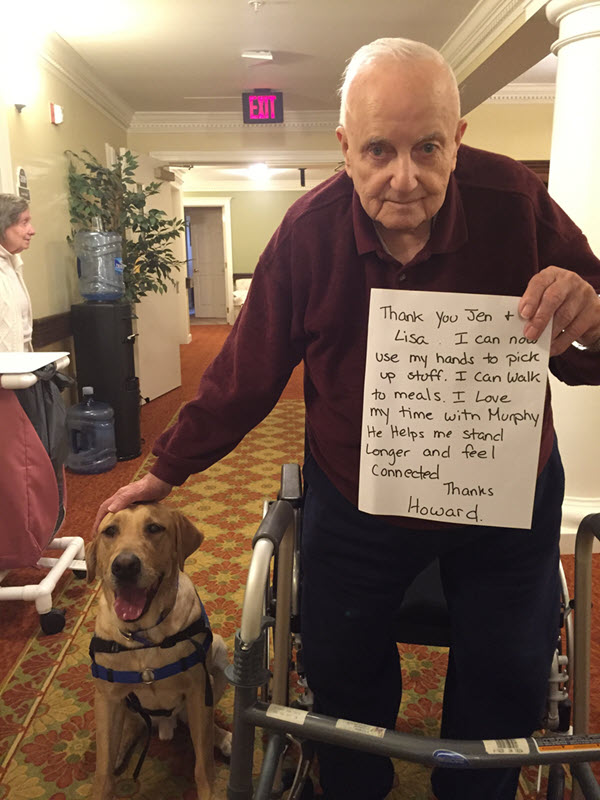
A facility dog is a dog who, directed by qualified staff within a designated facility, utilizes their special skills and training in animal-assisted interventions to help providers achieve specific treatment or program goals.
A facility dog is similar to a therapy dog, who may visit patients at many facilities accompanied by their volunteer handler for a few hours a week. The difference is that a facility dog works full-time at one facility under the care and supervision of a staff member. The staff member is the official owner of the dog. In addition to the comfort and companionship a therapy dog might bring through visitation, a Hero Dogs facility dog allows staff to achieve specific therapeutic goals.
Hero Dogs facility dogs will have had between 18 months and two years of specialized socialization and training. These dogs, who were in training to become service dogs, are seeking an alternative career generally due to either a minor health issue or behavior concern. For example, a dog might be fearful around traffic or on public transportation, or especially sensitive to loud sounds. The dogs are house trained, have good manners and extensive obedience training, as well as a large repertoire of specialized skills that can be used in a therapeutic setting.
What kinds of facilities are eligible for a facility dog?
Hero Dogs places facility dogs with organizations that fit into the following categories:
- Organizations who identify as primarily veteran-serving, first responders, or active-duty military (e.g. fire departments, law enforcement agencies, specialized rehabilitation centers)
- Clinicians who specialize in veterans, first responders, or active-duty military (e.g. private practice therapists, mental health organizations, physical therapists)
- Organizations that work in crisis response or trauma recovery (e.g. child advocacy centers, victim services organizations)
What are the benefits of a facility dog?
Facility dogs can help staff achieve program participation and treatment goals. They can aid first responders, therapists (physical, occupational, speech, and rehabilitation), social workers and other mental health practitioners, activity directors, and patient educators by:

- increasing motivation and participation
- increasing social interaction
- increasing feelings of security, well-being, and belonging
- creating a more home-like environment
- improving staff morale
- enhancing community engagement
Hero Dogs offers customized training, specific to the needs of your facility. Some examples of facility dog tasks include:
- Alerting to stress cues
- Providing grounding support
- Retrieving objects at someone’s direction
- Performing tricks to engage with the community (wave, salute, take a bow)
- Educating the public (stop drop and roll, crawl, help demonstrate medical procedures)
What are the requirements for a facility dog placement?
Facility
We require written authorization from whoever holds ultimate authority over this process at your facility (e.g. chief, executive director).
The dog will accompany the staff member to work on a daily basis, and the dog will go home with the staff member each night, so that the dog may have a respite from work and a normal and loving home/family environment, just as human staff members do. Other living arrangements may be approved on a case-by-case basis. During the work day, the dog’s needs for exercise, interaction, and rest must be met.
While the dog will have one primary handler, we will also train up to five additional handlers. There may be an additional charge for training handlers beyond those in the initial training.
Ownership

The dog must be owned by a single staff member, who will be responsible for the facility dog and for meeting the dog’s needs for safety, care, companionship, exercise, health, and training.
The individual owner must have no more than four pets (cat or dog) living with them. No more than two of these pets may be dogs.
Dogs will be placed on a six-month trial basis with ongoing evaluation of the success of the placement, after which time the responsible party will assume ownership of the dog. At the end of this trial, the individual will sign the adoption and transfer agreement.
Safety
The dog must be under the supervision of an approved staff member at all times when in the facility. The dog should not be permitted to roam freely about the facility due to potential dangers.
The dog should also have a comfortable, quiet area within the facility where the dog can be placed for their safety or simply when they need rest and down time.
Training

Although the dogs offered for placement as facility dogs have had a high level of training, that training needs to be maintained. This requires a commitment from the staff to undergo training themselves, and to agree to continue to work with the dog on an ongoing basis.
Approximately 20 hours of initial training will be required (generally divided as two and a half days at Hero Dogs) before placement. After placement, a monthly training session (one to two hours) is required each month for the following six months. This follow-up training may be conducted at Hero Dogs, at your facility, or in dog-friendly public areas, as dictated by training needs. At the end of the six month period, a certification examination is conducted at the facility. This certification includes both a written and a practical examination. Each approved handler must pass the practical examination.
We repeat the practical examination every two years, which is required in order for the dog to remain certified by Hero Dogs.